2026-09-29 ·
Why Every Tempe Home Buyer Needs a Pre-Purchase Sewer Scope Inspection
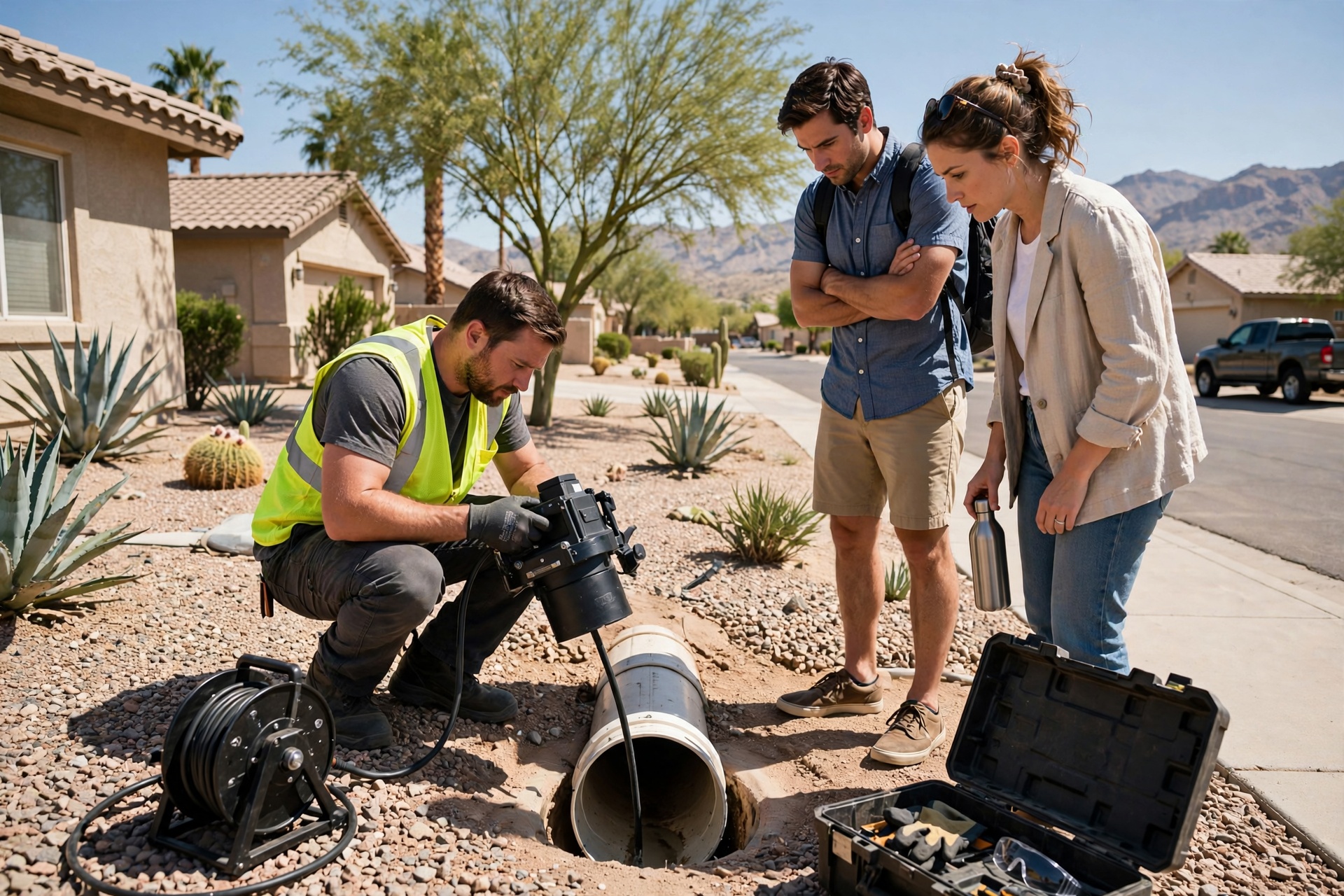
Every Tempe home buyer needs a pre-purchase sewer scope inspection because aging cast iron and clay lines common in Maricopa County properties often hide root intrusion, bellies, and cracks that surface only after purchase. In areas like Downtown Tempe near Tempe Town Lake and Mill Avenue, homes built before 1970 frequently connect to shared laterals that shift with the hot desert climate's extreme temperature swings. Skipping this step leaves buyers exposed to repair costs that can reach several thousand dollars once the deal closes.
Common Pipe Problems in Tempe Neighborhoods
Homes in Papago Park and South Tempe sit on soil that expands and contracts with the region's very hot summers and mild winters, stressing joints in older sewer lines. Tree roots from landscaping around Arizona State University properties push into pipe seams, especially where lines run under sidewalks or near Tempe Town Lake. A scope reveals these issues before buyers finalize offers on properties in Central Tempe or nearby Phoenix, Mesa, and Chandler.
Buyers often encounter offset joints or standing water in lines serving 1950s and 1960s ranch homes. These conditions worsen during monsoon rains when extra flow exposes weaknesses. Local operators note that South Tempe properties with larger lots see more root problems from mature trees compared to denser Downtown Tempe blocks.
What the Inspection Process Shows
A pre-purchase sewer scope uses a camera to travel the full length of the line from the cleanout to the main, identifying scale buildup, cracks, and sags that affect flow. In Tempe's hot desert climate, mineral deposits accumulate faster on pipe walls, narrowing diameter and increasing backup risk. The inspection documents exact locations so buyers can negotiate repairs or walk away from severe cases.
Reviewers check for bellies where the pipe dips and holds waste, a frequent finding in South Central Tempe due to settling soil. Footage also shows whether cast iron has thinned from decades of use near Mill Avenue commercial corridors. This detail helps buyers understand long-term maintenance needs specific to Maricopa County homes.
Why Standard Home Inspections Fall Short
General home inspectors rarely access sewer lines, focusing instead on visible plumbing. A dedicated scope catches problems hidden underground that only appear during heavy use or after heavy summer rains. Properties near Arizona State University often have shared laterals that complicate ownership boundaries and repair responsibility.
Buyers in Papago Park frequently discover root damage missed by visual checks alone. The hot climate accelerates corrosion in metal pipes, shortening service life compared to milder regions. Without footage, these issues surface months after closing when backups affect daily life.
Next Steps After the Scope Results
When the inspection identifies root intrusion or minor cracks, options include targeted tree root removal or cast iron pipe descaling before move-in. More extensive bellies may require sewer line belly repair or trenchless pipe lining to avoid full excavation in established South Tempe yards.