2026-09-29 ·
What a High-Resolution Sewer Camera Inspection Actually Reveals in Tempe Pipes
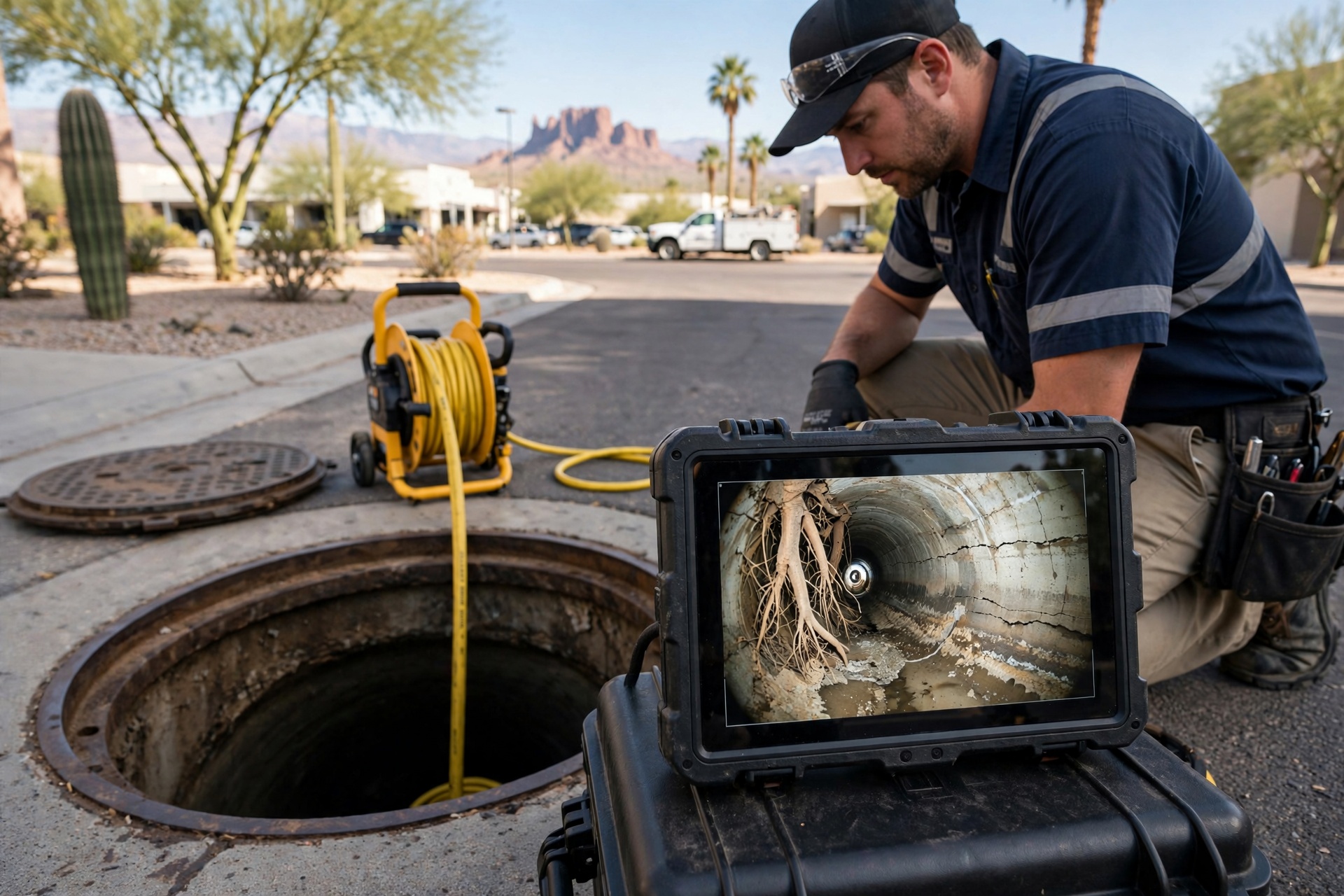
A high-resolution sewer camera inspection in Tempe pipes most often reveals tree root intrusions at joints, longitudinal cracks from soil movement, and heavy mineral scale from desert hard water in 60-75% of lines serving homes built before 1990 in South Tempe and Papago Park.
Root Intrusions Common Near Tempe Town Lake
In neighborhoods bordering Tempe Town Lake, cottonwood and mesquite roots frequently enter sewer joints because the constant moisture from the lake and irrigation keeps soil damp year-round. The camera typically shows roots starting at the 3 o'clock and 9 o'clock positions on 4-inch and 6-inch clay or cast-iron lines, then expanding into dense mats that reduce flow by more than half. These intrusions appear within 15-25 feet of the cleanout in many Downtown Tempe properties where mature trees sit close to the street. Once identified, the footage lets crews target only the affected sections instead of guessing. Readers dealing with recurring slow drains can review Clearing Slow Drains Caused by Desert Hard Water for related maintenance steps. The same footage also flags whether the roots have already deformed the pipe enough to require Trenchless Pipe Lining rather than repeated cutting.
Scale and Corrosion Patterns in South Tempe
South Tempe homes built in the 1970s and 1980s show thick calcium and magnesium deposits inside the pipe that the camera records as white, rough layers reducing interior diameter from 4 inches to roughly 2.5 inches. These deposits form faster during the hot summer months when evaporation concentrates minerals in the wastewater. The inspection also catches the start of cast-iron graphitization where the pipe wall turns spongy and flakes away, usually beginning at the bottom third of the line. Footage from properties near Mill Avenue often shows this corrosion combined with offset joints caused by minor settling in the sandy Maricopa County soil. Knowing the exact location and severity prevents unnecessary excavation when the damage stays localized.
Cracks and Bellies Found Around Arizona State University
Lines serving rentals and older single-family homes near Arizona State University frequently display hairline circumferential cracks at every joint and low spots where the pipe has sagged 1-2 inches over 10-15 feet. The camera reveals standing water in these bellies that never fully drains, creating the perfect spot for grease and paper to collect. In Central Tempe blocks with heavier traffic vibration, the footage sometimes catches longitudinal cracks that have not yet separated but will during the next monsoon season. These details matter because a 2-inch belly in a 4-inch line can hold enough debris to cause a backup within 8-12 months even after routine snaking.
How the Footage Guides Next Steps
Once the camera run finishes, the recorded footage shows the exact distance from the cleanout to each defect so crews can plan repairs without exploratory digging. Homeowners near Phoenix, Mesa, or Chandler borders often request a copy of the video to share with real-estate agents during sales. When the inspection uncovers multiple issues, the same file helps decide between spot repairs and full Trenchless Pipe Lining. Properties that show early root entry but intact pipe walls can usually return to normal flow after one Tree Root Removal visit instead of lining. The inspection also documents conditions before any work, giving both the homeowner and the crew a clear baseline for future reference.
Seasonal Timing That Affects What Shows Up
Inspections performed after the first monsoon rains in July or August tend to reveal more active leaks because water pressure pushes through small cracks that stay dry the rest of the year. Winter runs, when temperatures stay mild, show less steam on the lens and make it easier to read fine scale layers. In Papago Park homes with shallow lines, the camera often records sand infiltration right after heavy wind events that accompany summer storms. Scheduling the inspection during these different periods gives a fuller picture of how the pipe behaves across Tempe's hot desert climate swings.