2026-09-29 ·
Commercial Grease Trap & Kitchen Drain Jetting Guidelines for Tempe Restaurants
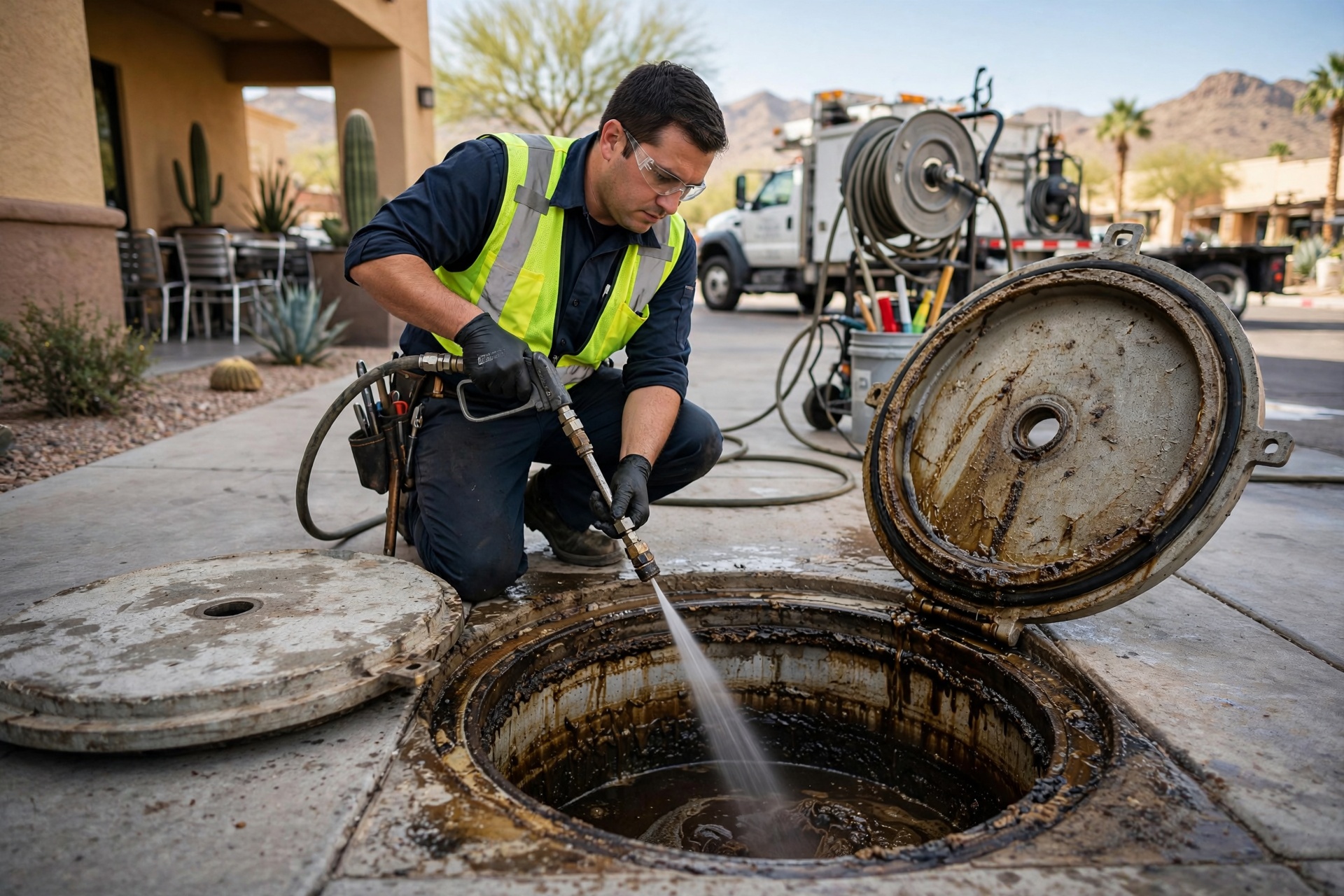
Tempe restaurants should schedule commercial grease trap pumping every 30 to 90 days and kitchen drain jetting every 6 to 12 months depending on daily grease volume and menu type. High-traffic spots in Downtown Tempe and near Arizona State University generate heavy loads from fryers and grills, while the hot desert climate keeps fats more fluid until they cool in lines and solidify.
Grease Trap Pumping Intervals in Maricopa County
Restaurants in South Tempe and Papago Park areas typically need 30-day cycles when serving fried foods daily, while lighter operations can stretch to 60 or 90 days. Inspect the trap monthly by checking the solids layer depth; once it reaches one-third of capacity, schedule service immediately. The mild winters reduce seasonal slowdowns compared to colder regions, so consistent year-round pumping prevents FOG accumulation that leads to city violations. Track waste manifests to stay ahead of Maricopa County health inspections.
Kitchen Drain Jetting Steps for Tempe Kitchens
Begin by isolating the line at the cleanout near the grease trap, then run a 3,500 to 4,000 PSI jetter head through the 3-inch or 4-inch pipe at 8 to 12 gallons per minute. Work from the downstream end toward the trap to push debris out rather than compacting it. In older buildings along Mill Avenue, expect cast iron sections that may require slower passes to avoid damage. Follow each jetting with a camera inspection to confirm the line is clear before returning the kitchen to service.
How Tempe's Hot Desert Climate Affects Grease and Drains
Summer temperatures above 100 degrees keep grease liquid longer inside traps but allow rapid solidification once it reaches cooler underground lines, creating stubborn blockages in South Central Tempe restaurants. Desert hard water adds mineral scale that combines with FOG to narrow pipes faster than in Phoenix or Mesa kitchens. Operators should increase jetting frequency during peak summer months when air conditioning runoff and high water use compound the load on shared sewer laterals.
Common Warning Signs and Immediate Actions
Slow sink drainage during lunch rushes, gurgling sounds at floor drains, and odors near the dish pit all point to grease trap overflow or partial line blockage. When these appear, isolate the affected fixture and avoid chemical additives that can push problems downstream into Tempe Town Lake-area mains. Commercial Kitchen Drain Jetting restores flow without excavation, while linking to Clearing Slow Drains Caused by Desert Hard Water explains scale interactions common in Maricopa County water.
Coordination With Nearby City Systems
Tempe lines connect to larger Phoenix and Chandler mains, so backups near the 1553 W 7th Pl service base often trace to shared laterals serving multiple restaurants. Schedule jetting during off-peak hours to minimize impact on Arizona State University-area traffic. Maintain records of every service call to demonstrate due diligence during health department reviews.